
Sound Masking vs Sound Proofing
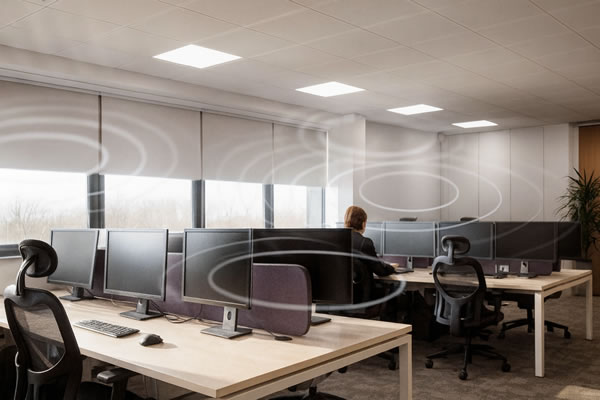
Sound Masking vs. Sound Proofing: What’s the Difference? Noise control is one of the critical factors to consider in designing a productive and comfortable working environment. Whether you’re designing an office, healthcare environment, education setting, or any space where privacy and focus matter, understanding the difference between sound masking and soundproofing is key. While both terms are often used interchangeably, they serve very different purposes and deliver different results. What is Sound Masking? Sound masking adds an unobtrusive background noise to a space that reduces how far conversations can be heard. Instead of blocking noise, it works by covering the noise with a specifically engineered sound-usually similar in character to soft airflow. This diminishes speech intelligibility so that nearby conversations blend into the background and become less distracting. Modern systems allow you to fine-tune the sound for different zones, including open offices, meeting rooms, call centres, and reception areas. The goal isn’t to make a space louder but to create a consistent acoustic environment that supports productivity and protects privacy. Benefits of Sound Masking: What is Sound Proofing? Soundproofing involves physically blocking, absorbing, or isolating sound to stop its entrance or exit from a room. This often requires architectural changes such as insulated walls, acoustic panels, specialist doors, ceiling treatments, or floor underlays. This is designed to provide a barrier that prevents sound transmission between spaces. Because soundproofing generally depends on materials and construction methods, planning usually occurs during the initial stages of a building or renovation project, although retrofitting is still possible. Benefits of Sound Proofing: Which Solution Is Right for You? Your choice depends on the challenges you’re trying to solve. Consider sound masking to improve privacy in open areas, reduce distractions, or increase comfort without major construction work. Choose sound proofing whenever sound transmission between rooms needs to be blocked, confidentiality is required, or acoustics must be controlled in performance, broadcasting, or specialist applications. In many workplaces, a combination of both offers the most effective result. How we can help? If you want to increase acoustic privacy, reduce distractions, or boost productivity in the workplace, we can help. We design and install professional sound masking solutions tailored to your environment. Contact us today to arrange a consultation, and we’ll find the right solution for your space.
Sound Masking vs White Noise: What’s the Difference?
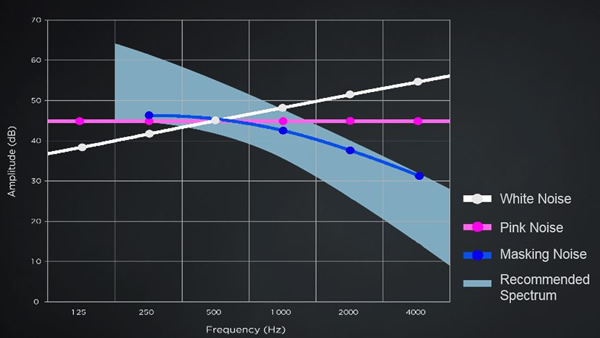
If you’ve ever struggled with distracting office noise or wanted to improve speech privacy, you may have come across the terms sound masking and white noise. Many people assume they are the same thing, but they actually serve different purposes. In this blog, we’ll break down the key differences that will help you determine which solution is right for you. What is White Noise? White noise is consistent, unstructured sounds that combines frequencies at the same intensity. It sounds like static or the hum of a fan and is often used to block out background noise. While it can be effective for masking some distractions, it isn’t tailored to specific environments, meaning it can sometimes become just another source of noise. What is Sound Masking? Sound masking is a more sophisticated and controlled approach to managing noise. Instead of producing random frequencies like white noise, sound masking technology emits a specifically engineered sound that blends into the background, making unwanted conversations and noises less noticeable. Unlike white noise, it is designed to match the frequency of human speech, which in turn, improves speech privacy and reduces distractions in office spaces, healthcare settings and other workplaces. Feature White Noise Sound Masking Sound Type Random, unstructured Engineered to match speech frequencies Purpose General noise reduction Speech privacy & distraction control Effectiveness Can be distracting itself Blends naturally into the background Common use Sleep aid, home environments Offices, healthcare, commercial spaces Comparison table Why Do People Get Them Confused? The confusion between sound masking and white noise comes from their shared goal of reducing noise distractions. However, sound masking is more advanced, as it’s designed to integrate seamlessly into an office environment to enhance privacy without adding disruptive background noise. How We Can Help If you’re looking to improve speech privacy and reduce distractions in your workplace, our expert sound masking solutions can help. We design and install tailored systems to create a more productive and comfortable environment. Get in touch today to learn more about how sound masking can transform your space!
What is Sound Masking and how can it benefit your workspace?
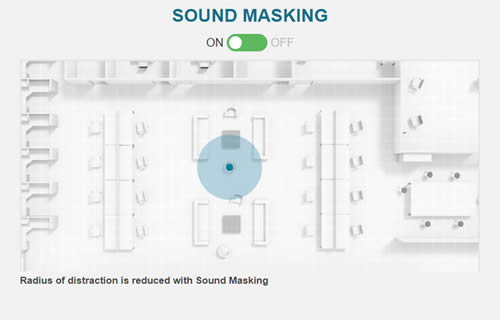
Have you ever been sat in an open office or workspace, unable to concentrate because you can hear everyone’s conversations around you? If yes, then sound masking might be the answer for you! Sound masking is the process of implementing specifically engineered background noise into your environment, ensuring that distractions are kept to a minimum. Sound masking adds sound to the area and whilst this may seem counterintuitive, it’s actually the opposite. By introducing ambient sound, the building will in fact seem quieter as opposed to filled with distracting noise. Sound masking is beneficial for several reasons. Its main purpose is to reduce any background distractions or noises, allowing you to focus on your own work rather than being able to hear additional sounds. By implementing this process into your workspace, any conversations that take place over 15 feet away will be unintelligible, allowing you to work in a quiet and calm space free of interruptions. This results in an improvement in employees efficiency, concentration and comfort levels which can often be a struggle in an open environment. By adding sound, words become less easy to understand, which in turn means naturally tuning out these distractions. Sound masking allows for speech privacy. If you are having a confidential meeting or private conversation in a public or open setting, sound masking allows you to speak openly without fear that your conversation is being heard by those around you. However, this does not mean that speech will be incomprehensible. Sound masking simply reduces how far away a conversation can be heard, ensuring that those around you can work not only in peace, but also cannot hear what is being said. Not only this, but by adding sound masking into your workspace, the acoustics of the area are drastically improved. Loud background noises and disturbances are replaced by calm and balanced conditions, with just the right level of ambience. With engineered masking, sound levels are not too low or too high, but simply just right for those who are wanting to work in a comfortable environment. So, isn’t sound masking just the same as white noise? Not at all! Sound masking is ambient background noise that is custom-designed to match the frequency of human speech, to allow conversations to be kept private and secure from surrounding people. The ambient noise is similar to that of airflow, but does not disrupt any conversations by being too overbearing. It is engineered to fade into the background of any workspace, almost as if fitting in with the “hum” of the environment. Sound masking allows for your workspace to become more efficient and comfortable for those working in the environment. Not only is noise kept to a minimum, but any private or confidential conversations are kept secure, allowing you to speak freely within the area without the fear of being listened to. Contact us today to get a free sound masking requirements analysis and design!