
Visitor Management Systems for Schools, Colleges & Universities
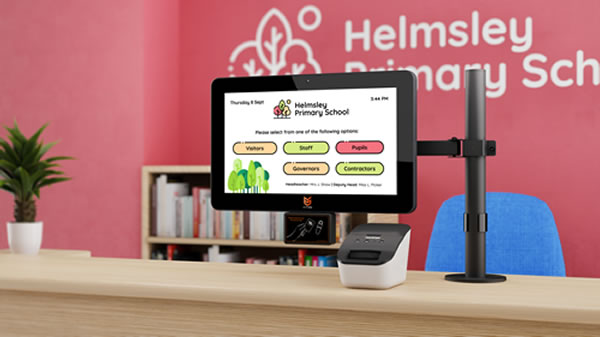
It is important to ensure that educational settings have a strict system of safeguarding in place. Managing the entry of visitors can be a complex task for schools, colleges and universities. Therefore, it is important to have a reliable system in place. Visitor management systems can be used to manage the entry of visitors to schools, colleges and universities. Supporting Safeguarding Policies Visitor management systems enable educational institutions to track the people entering their premises. This is helpful for safeguarding procedures. Visitors can check in at reception desks to be given temporary badges to identify them as authorised visitors. Managing Contractors & Temporary Visitors Schools and universities have many contractors and guests visiting the premises during the day. Parents of the students also visit the school. A visitor management system makes the management of these visitors easier. Pre-registration of the visitor allows the visitor to register their details in advance. Improving Campus Security For educational institutions, the campuses may have more than one building and facility. Visitor management systems can be useful in monitoring the activity of the visitors and allowing only authorised persons to access certain areas. Creating a Safer Learning Environment With the implementation of digital visitor management processes, educational institutions can create a more secure environment for the students and staff. If you’re looking to improve visitor management across your school or campus, our team can help you find the right solution for your education environment.
Evacuation vs Invacuation – What’s the Difference?
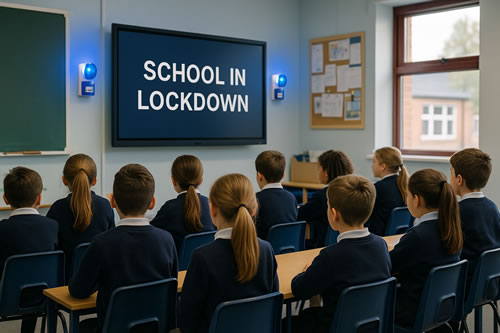
Every second counts in an emergency, but the right response depends upon what kind of threat you’re dealing with. For years, schools and workplaces have focused on evacuation plans, but growing awareness of Martyn’s Law-the UK’s upcoming Protect Duty-has made invacuation and lockdown systems similarly essential. So, what’s the difference, and how do both fit into a modern safety strategy? Evacuation: Getting Everyone Out Safely Evacuation is the means whereby people are moved away from danger-usually to an assembly point outside the building. It is essential in cases of fire, gas leaks, or any other structural hazards that may pose great risks if remaining indoors. These will usually include: Yet not every threat calls for leaving the building and in some cases going outside only increases risk. Invacuation: Safety Within Invacuation, or “reverse evacuation”, means moving people into a safer internal location when the threat is outside. It’s most relevant for situations such as: An invacuation or lockdown system provides staff with the capability of immediately alerting, securing, and accounting for everyone indoors. Automated lockdown alerts, door controls and two-way communication can all form part of an integrated system that reduces confusion and speeds up response times. Why Lockdown Systems Matter As per Martyn’s Law, schools and public venues will soon be under a legal duty to protect pupils, staff and visitors against terrorism and serious threats. In other words, that means being able to respond effectively — whether by evacuating or locking down. A properly designed Lockdown solution: Evacuation and invacuation are not competing strategies; they’re the two sides of the same safety plan. By putting both together with a robust lockdown system, schools will be able to respond flexibly to whatever type of threat that might occur and protect everyone on site, while meeting the standards set by new legislation. If you would like expert help in selecting or upgrading your lockdown solution for your school, we can guide the design of a system to suit your site and safeguarding needs. Speak to us today for a consultation and see how we can help you become compliant.
SEN vs Standard School Lockdown Systems – What’s the Difference?
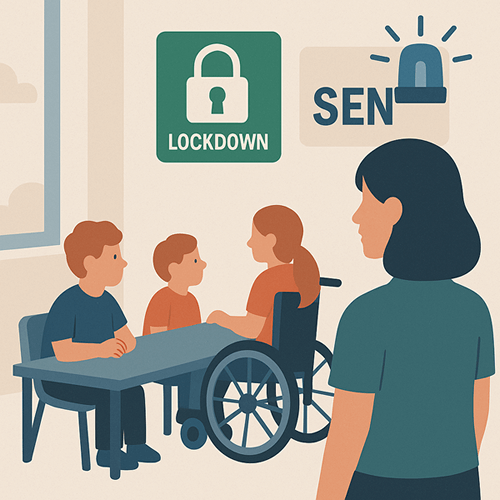
Every school needs a reliable method of keeping their staff and pupils safe in an emergency. However, for SEN schools, a one-size-fits-all lockdown system simply does not work. With Martyn’s Law making protective security a legal duty, it is now more important than ever to understand the differences in lockdown systems in SEN and mainstream settings. What a Standard School Lockdown System Looks Like In most schools, a standard lockdown system allows staff to: These systems are designed for rapid, building-wide responses. But in SEN environments, factors like sensory sensitivities, mobility needs, and one-to-one support mean the system must work differently. Lockdown Adaptation for SEN Schools An SEN lockdown system should prioritize clarity, calmness, and accessibility. Adaptations to include: It is not just about compliance; the aim is to ensure every pupil and member of staff feels safe, supported, and understood in a high-stress situation. How Martyn’s Law Reinforces the Need for Adaptable Systems Martyn’s Law will require schools to assess the risks and prepare proportionate protective measures, which for SEN schools equates to demonstrating that lockdown systems are effective and inclusive. With adaptable, user-friendly lockdown technology, schools can deliver on legislative expectations and reinforce safeguarding policies without causing undue alarm among students. Every school-whether mainstream or SEN-deserves a lockdown system that’s intuitive, clear, and keeps everyone safe. By focusing on accessibility, staff training, and compliance right from the start, schools can create safer environments that meet the standards Martyn’s Law confidently sets. For assistance with assessing or improving your school’s lockdown program, our experts will help tailor a solution to meet the unique needs of your site. Get in touch today!
Why School Lockdown Systems Are Essential for Student Safety in the UK
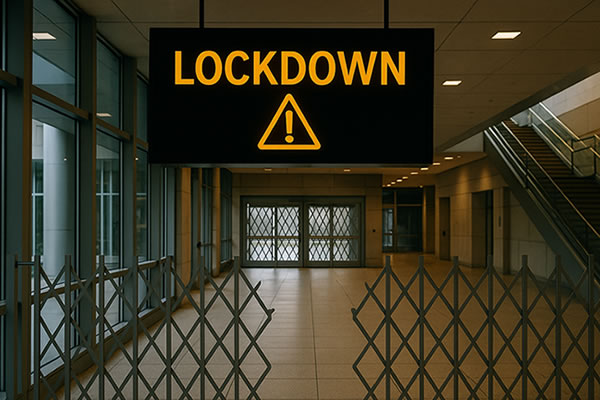
In today’s world, ensuring the safety of students and staff has never been more critical. With the implementation of Martyn’s Law, UK schools and colleges must take proactive steps to prepare for potential threats, both internal and external. One of the most effective ways to do this is by implementing a robust school lockdown system. What Is a School Lockdown System? A school lockdown system is an emergency communication solution designed to help schools respond quickly and effectively to serious incidents. These systems allow designated staff to send instant alerts and clear instructions across the site to protect lives during critical situations. Whether the threat comes from outside the grounds, within the school perimeter, or inside a building, the response may vary but the need for rapid, unambiguous communication is universal. Types of Lockdown Procedures In the UK, schools often use a combination of the following protocols, depending on the nature of the incident: Having the right system in place ensures these instructions can be delivered clearly and quickly to the right people, without delay or confusion. Why UK Schools Must Take Action Now New legislation under Martyn’s Law requires education providers to assess and improve their preparedness for terrorism-related incidents. Beyond compliance, the moral obligation to protect students and staff means investing in the right tools to act fast in an emergency. Unfortunately, many schools still rely on outdated or manual methods for communication, such as phones, tannoys, or verbal relays. These approaches are often too slow or unreliable during high-stress events, increasing the risk of miscommunication and delayed response. The Role of Mass Communication Technology Modern mass communication systems give schools the power to send site-wide or targeted alerts instantly via multiple channels, audio, visual and digital. This ensures every student, teacher and support staff member knows exactly what to do, wherever they are on campus. With the right solution in place, schools can: How We Can Help We specialise in providing advanced school lockdown and mass communication systems tailored for UK education settings. Our technology enables fast, reliable and targeted communication during emergencies, whether you need to lock down, evacuate, or initiate an invacuation. From system design to installation and staff training, we support your school every step of the way in building a safer, more responsive environment. Get in touch today to learn more about how our emergency communication solutions can help your school stay prepared, compliant and protected.
The Future of Collaboration: Leveraging Interactive Displays in Business and Education
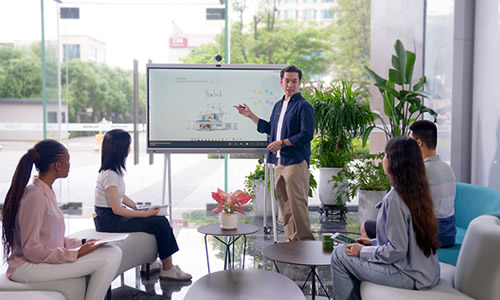
Collaboration is at the heart of modern workplaces and educational associations. As remote and hybrid work models continue to grow, businesses and schools need technology that fosters engagement and seamless interaction. Interactive displays have emerged as a game-changing solution, transforming meetings, training sessions and classrooms. How Interactive Displays Enhance Collaboration Why Your Business or School Should Invest in Interactive Displays As businesses move towards more dynamic and hybrid work environments, interactive displays ensure meetings are productive and engaging. In education, these displays support active learning, making lessons more immersive for students. Check out our range of interactive displays here. At Rapid Technologies, we provide a range of high-quality interactive displays designed to enhance collaboration in corporate and educational settings. Whether you’re upgrading your meeting spaces or modernising classrooms, we have the right solution for you. Get in touch today!
Choosing the Right Hi-Lo Screen Mount: A Guide to the Screenlift, Mono and Duo Ranges

When it comes to installing large screens, safety and stability are just as important as functionality. Whether you’re setting up a display in a classroom, meeting room, or conference space, choosing the right electric screen mount can make all the difference. At Rapid Technologies, we specialise in high-quality audio-visual solutions and today we’re taking a closer look at the Hi-Lo Screenlift, Mono and Duo ranges – all designed to ensure safe, reliable screen movement with innovative anti-collision technology. Hi-Lo Screenlift Range: Versatile & Secure Mounting The Hi-Lo Screenlift range offers a robust solution for wall-mounted screens, with built-in safety mechanisms to prevent instability in case of collisions. If the mount encounters an obstruction, it exerts only minimal additional force (3-5kg above the screen’s weight), ensuring the screen remains securely in place. For walls that are not structurally strong, it’s best to choose a trolley, free-standing mount, or a floor plate accessory to distribute the load and prevent stress on fixings. The Easy Install Wall Bracket also enhances stability, spreading the weight across a larger area of the wall structure. Hi-Lo Mono Range: Advanced Safety with Gyroscopic Anti-Collision Technology The Hi-Lo Mono range is ideal for environments that demand maximum safety, thanks to its overload and gyroscopic anti-collision technology. If the mount meets resistance, the built-in overload device stops operation immediately, preventing any further damage. Meanwhile, the gyroscopic sensor detects tilting or obstructions, automatically reversing the motor by 30mm before cutting power – minimising risks during operation. To enhance stability, consider a Wall to Floor Mount Floor Plate accessory to reduce stress on wall fixings, especially where walls may not be strong enough to support the screen on their own. Hi-Lo Duo Range: Built-In Piezo Sensor for Added Protection The Hi-Lo Duo range comes equipped with a piezo sensor for anti-collision detection, ensuring that if the mount encounters resistance, it stops immediately to prevent damage. As with all motorised screen mounts, it’s crucial to maintain a clear 300mm space around the screen to prevent incidents. In educational environments, keeping the operation switch out of children’s reach and using clear signage can further enhance safety. Find the Perfect Hi-Lo Mount for Your Space Whether you need a wall-mounted, floor-supported, or freestanding solution, the Hi-Lo Screenlift, Mono and Duo ranges offer reliable and secure options for any environment. Their built-in safety features, combined with additional accessories like the Anti-Crush Bar, make them an ideal choice for schools, offices and commercial spaces. Need help selecting the right screen mount for your project? Contact us today for expert advice and professional installation services.
Enhance learning & engagement in the classroom

As technology continues to shape the world, it is no surprise that many educational establishments are investing in interactive displays (or interactive whiteboards as they are commonly known) to further engage and educate students. By using technology within the classroom, children are often able to get involved more in their lessons, as they can collaborate both with teachers and classmates. With that being said, here are a few reasons we think teachers should be using interactive technology as a way of engaging their students: As previously mentioned, by using interactive technology within the classroom, both students and teachers can collaborate with each other with ease, creating an exciting and enriching learning environment. Rather than relying on pen and paper, technology allows everyone to be involved, thanks to the interactive software that comes along with the display. Annotate, write notes, watch videos or play educational games to engage students and enable them to work together. Students are encouraged to learn how to use technology; a skill that will help them going into the workplace. Instead of relying on notebooks and worksheets, interactive displays enable different varieties of teaching using videos, pictures and audio. By providing different ways to learn within the classroom, students are able to comprehend topics and lessons easily, particularly those who may struggle to learn with traditional teaching and learning methods. The ability to use different colours and layouts on an ever-expanding infinity canvas, which never runs out of space, allows for a more exciting experience that will capture the interests of students as opposed to pen and paper. Interactive displays allow teachers to easily create their own lesson plans or use premade ones, that are interesting and accessible. It is easy to change and customise content, making the planning process more efficient, whilst also providing a fun and captivating experience for students. Customisation allows teachers to tailor content to suit the needs of their students, eliminating the need for them to reprint or redo teaching resources. By taking the inconvenience out of creating new learning materials, teachers are able to focus more on the needs of their students. Teachers can see how well their lessons are being perceived by students through real-time feedback that can be accessed via online quizzes, polls and assessments. By using these, teachers are able to adapt and change their lessons efficiently to create the best possible learning environment for their students. To summarise, interactive displays provide endless ways to create enriching learning experiences without the hassle, that will ensure students leave their lessons feeling engaged. By using interactive displays in the classroom, students are encouraged to interact and collaborate, both individually and as a group, using the different tools available, including videos, pictures and quizzes. If this sounds like something that you would like to hear more about, then don’t hesitate to contact us!