Every second counts in an emergency, but the right response depends upon what kind of threat you’re dealing with. For years, schools and workplaces have focused on evacuation plans, but growing awareness of Martyn’s Law-the UK’s upcoming Protect Duty-has made invacuation and lockdown systems similarly essential.
So, what’s the difference, and how do both fit into a modern safety strategy?
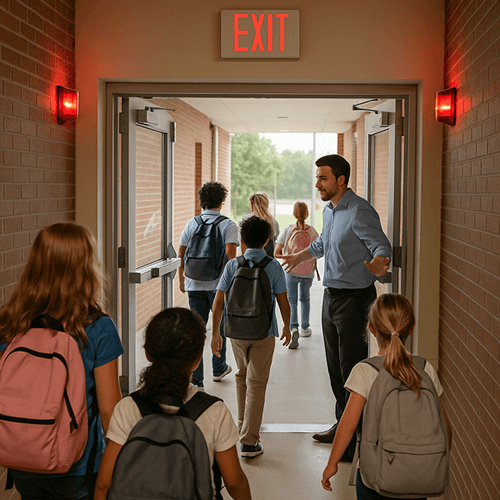
Evacuation: Getting Everyone Out Safely
Evacuation is the means whereby people are moved away from danger-usually to an assembly point outside the building. It is essential in cases of fire, gas leaks, or any other structural hazards that may pose great risks if remaining indoors.
These will usually include:
- Clearly marked exits and escape routes
- Fire alarms and audible warnings
- Muster points and roll calls
- Coordination with rescue services
Yet not every threat calls for leaving the building and in some cases going outside only increases risk.
Invacuation: Safety Within
Invacuation, or “reverse evacuation”, means moving people into a safer internal location when the threat is outside. It’s most relevant for situations such as:
- An intruder or a security threat
- Civil disturbance nearby
- Environmental hazards include smoke, pollution and extreme weather.
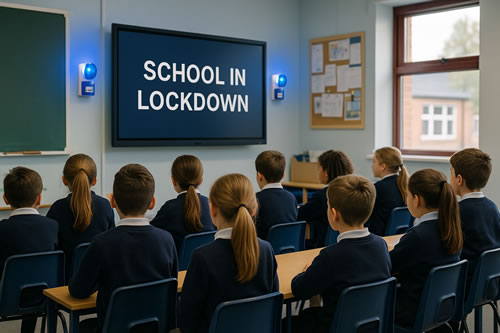
An invacuation or lockdown system provides staff with the capability of immediately alerting, securing, and accounting for everyone indoors. Automated lockdown alerts, door controls and two-way communication can all form part of an integrated system that reduces confusion and speeds up response times.
Why Lockdown Systems Matter
As per Martyn’s Law, schools and public venues will soon be under a legal duty to protect pupils, staff and visitors against terrorism and serious threats. In other words, that means being able to respond effectively — whether by evacuating or locking down.
A properly designed Lockdown solution:
- Integrates seamlessly with existing fire and alarm systems.
- Provides clear, distinct alerts for evacuation vs invacuation
- Supports communication over several buildings or zones
- Helps to demonstrate compliance with Martyn’s Law and safeguarding standards.
Evacuation and invacuation are not competing strategies; they’re the two sides of the same safety plan. By putting both together with a robust lockdown system, schools will be able to respond flexibly to whatever type of threat that might occur and protect everyone on site, while meeting the standards set by new legislation.
If you would like expert help in selecting or upgrading your lockdown solution for your school, we can guide the design of a system to suit your site and safeguarding needs. Speak to us today for a consultation and see how we can help you become compliant.